

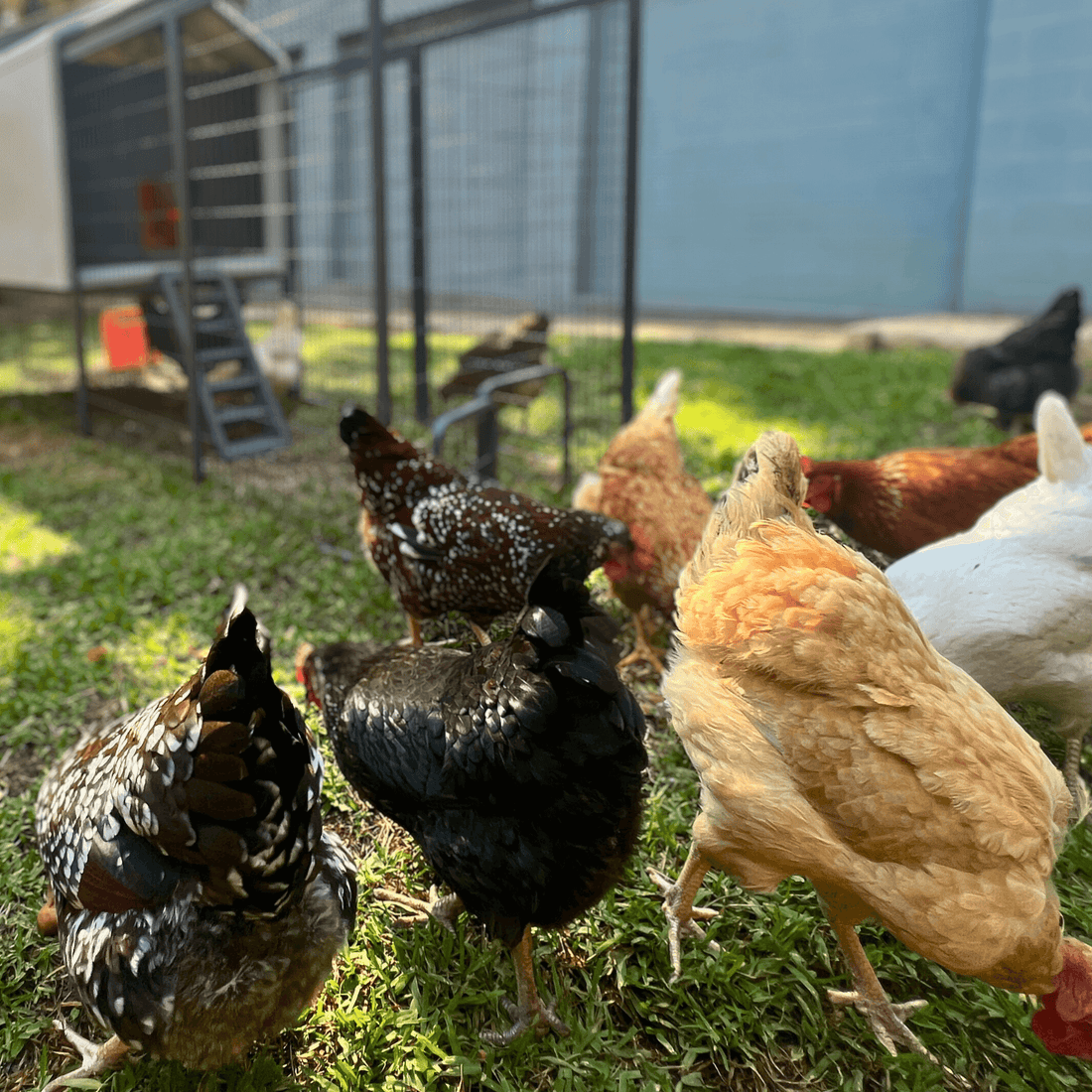
Welcome to your ultimate beginner’s guide to raising chickens for eggs! 🐣 Whether you’re curious about backyard farming or ready to collect your first homegrown omelet, this quick-start guide will boost your poultry IQ. You’ll learn the basics of chicken care, the benefits of raising your own flock, and how to set up a modern Smart Coop for happy, healthy hens.
🥚 Chapter 1: The Joy of Raising Chickens
Fresh Eggs, Straight from the Source
There’s something deeply satisfying about collecting your own fresh eggs. Not only do homegrown eggs taste richer and fresher than store-bought ones, but they’re also packed with more nutrients like omega-3s and vitamin D. Raising your own flock means you control their diet and environment — so every egg comes from a truly happy, healthy hen.
Therapeutic Benefits & Bonding
Raising chickens isn’t just about food; it’s about connection. Many new flock owners discover that chicken keeping is surprisingly therapeutic. Spending time outdoors, observing your hens, and caring for them can ease stress, boost mindfulness, and bring daily joy. And yes — chickens absolutely recognize their humans and form affectionate bonds. 🐥
🐓 Chapter 2: Getting Started
Choosing the Right Chicken Breeds
Not all hens are created equal! Your first step is picking breeds that match your climate, space, and egg goals.
- Rhode Island Reds: Hardy, consistent layers with classic brown eggs.
- Leghorns: Prolific egg producers known for their bright white eggs.
- Sussex: Friendly, docile birds that thrive in most backyard setups.
Tip: If you live in a colder region, choose breeds known for winter laying and cold tolerance.
Setting Up Your Smart Coop
Gone are the days of rickety wooden coops. With modern innovations like the Smart Coop, you can raise chickens with less maintenance and more peace of mind. Features include:
- Double-walled insulation to keep temperatures stable year-round
- Automatic doors synced with sunrise and sunset
- Live camera monitoring via the Coop app
- Built-in safety and sanitation features (including compostable litter trays)
The Smart Coop gives your flock a secure, low-stress home — and gives you back your weekends. 😉
🌾 Chapter 3: Chicken Care Basics
Providing Proper Housing
A clean, dry, predator-proof coop is the foundation of good chicken care. Prioritize:
- Ventilation: Proper airflow reduces humidity and ammonia buildup.
- Space: Allow 3–4 square feet per chicken inside the coop and 8–10 in the run.
- Insulation: Stable temperatures prevent stress and illness.
Good news: the Smart Coop already checks every box — designed to protect your flock from raccoons, foxes, and the elements.
Nutrition & Feeding
A balanced diet is key to strong eggshells and healthy hens. Start with high-quality chicken feed as the base, and add variety with safe kitchen scraps (veggies, fruits, grains). Avoid foods like chocolate, onions, or avocado — these can be toxic to chickens.
Always provide fresh, clean water and grit for digestion. And if your hens free-range, they’ll naturally supplement their diet with bugs and greens.
Health & Disease Prevention
Keep your flock thriving with a few simple habits:
- Perform quick health checks weekly — look for bright eyes, clean feathers, and alert behavior.
- Clean the coop regularly (or just replace your compostable litter trays for a 30-second cleanup).
- Partner with an avian vet for guidance on vaccinations and routine care.
🥚 Chapter 4: Understanding the Egg-Laying Cycle
Most hens start laying between 18–24 weeks old, depending on breed and season. Each egg takes about 24–26 hours to form, from yolk to shell. Expect one egg per hen per day at peak laying — though this naturally slows in winter.
Fun fact: Chickens lay best when they’re happy, secure, and have 14+ hours of daylight — another reason why Smart Coop’s design makes a difference.
✨ Final Thoughts
Raising chickens for eggs is more than a hobby — it’s a lifestyle of connection, sustainability, and delicious rewards. With the right setup and a little daily care, you’ll enjoy fresh eggs, happy hens, and the unmatched satisfaction of self-sufficiency.
Ready to start your flock? Explore the Smart Coop and join thousands of families discovering how easy (and fun) backyard chicken keeping can be.


